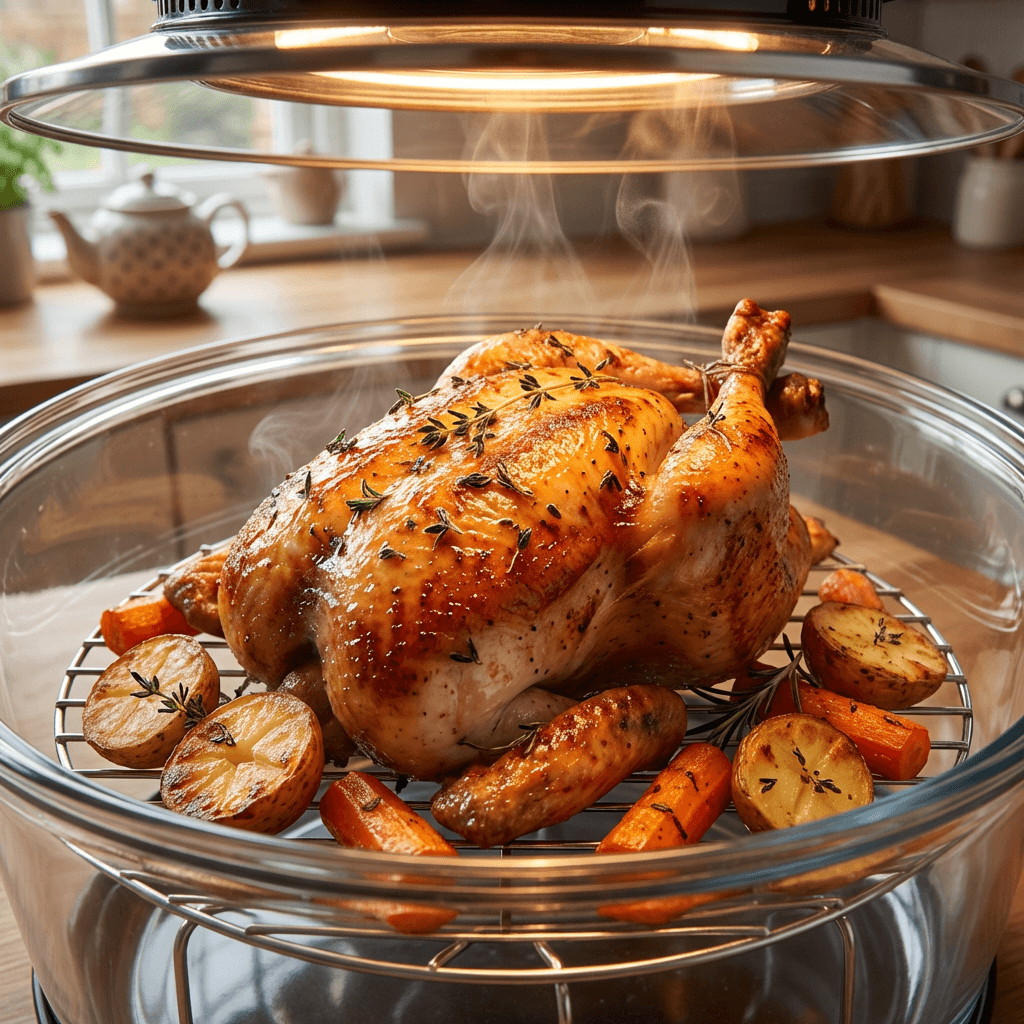

If you live in Britain and you are trying to cook smarter without sending your electricity bill through the roof, the halogen oven still deserves a serious look in 2026.
It may not be the trendiest kitchen gadget anymore. Air fryers dominate the headlines. Multi-cookers are everywhere. And many households already have a full-size built-in oven that feels “good enough.” Yet the halogen oven keeps hanging on for one simple reason: for many people, it still does a very useful job at a very reasonable cost.
That matters even more now. From 1 April to 30 June 2026, the Ofgem price cap average for electricity on a standard variable tariff is 24.67p per kWh, and wider reporting suggests energy pressure may rise again later in 2026, with forecasts pointing to a higher cap from July.
So the real question is not whether a halogen oven is fashionable.
The real question is this:
Is a halogen oven still worth buying in Britain in 2026 if you care about cost, convenience, and everyday cooking?
For many over-50s, small households, budget-conscious families, and people who do not want to heat a whole large oven for a couple of potatoes or a few chicken thighs, the answer is still yes.
In this guide, we will look at the real pros, the real drawbacks, and the kind of savings you can realistically expect in Britain in 2026.
What Is a Halogen Oven, Exactly?
A halogen oven is a compact countertop cooker with a glass bowl and a lid that contains a halogen heating element and fan. It cooks food using a mix of direct heat, hot air circulation, and high temperatures, which helps meals cook faster than in a traditional large oven. Typical UK models commonly sit around 1400W, with examples from current retail listings showing 12L to 17L halogen ovens at that power level.
That combination is what makes halogen ovens attractive. They heat up quickly, usually need little or no preheating, and let you see your food through the glass bowl while it cooks. For someone who wants practical, visible, straightforward cooking, that is a genuine advantage.
In other words, a halogen oven is not trying to replace every appliance in your kitchen. It is trying to make a lot of everyday meals quicker, simpler, and often cheaper.
Why People in Britain Are Still Interested in Halogen Ovens in 2026
There is a reason halogen ovens have not disappeared.
Even though air fryers get more attention, halogen ovens still appeal to British buyers because they offer three things many people care about:
- Low upfront cost
- Lower running cost than a full-size oven for small and medium meals
- Good visibility and roomy bowl space
On UK retail listings, halogen ovens are still widely available around the budget end of the market, with examples around £37.99 to £39.99 for popular 1400W models.
That makes them attractive to households that do not want to spend £100+, £150+, or even £200+ on a premium air fryer or multifunction cooker. By contrast, current UK air fryer listings range from entry-level models to much larger and more expensive units, including examples at £49.99, £69.99, £89.99, and above.
So from the start, the halogen oven has one strong point in its favour:
It is still one of the cheaper ways to get faster countertop cooking at home.
The Running Cost Question: What Does It Cost to Use?
This is the part most people really care about.
Using the current Ofgem average electricity rate for April to June 2026: 24.67p per kWh, a 1400W halogen oven costs about:
- 14p for a 25-minute cook
- 20p for a 35-minute cook
- 26p for a 45-minute cook
Those figures come from simple usage calculations at 1.4kW.
Now compare that with a standard electric oven. Current UK product listings show many built-in ovens around 2.5kW, while manufacturer technical pages often list connected loads around 2.99kW, and Bosch’s own technical data shows energy consumption per cycle around 0.81–0.99 kWh depending on mode.
A simple 2.5kW one-hour usage estimate at today’s electricity rate comes out at roughly 62p per hour.
That does not mean a halogen oven always costs a third as much as a regular oven in every real-life scenario. Cooking times differ. Food loads differ. Some ovens are more efficient than others. But it does show why halogen ovens can still make financial sense when you are cooking smaller portions, single-tray meals, or quick everyday food.
Real-Life Savings: What Do They Look Like Over Time?
Let’s keep it realistic.
Imagine you use a halogen oven for a modest evening meal four times a week, and each cook lasts around 30 minutes. At current electricity rates, that works out to about £35.92 per year in electricity for the halogen oven.
Now imagine you used a full-size 2.5kW oven for roughly one hour four times a week for similar general meal preparation. That comes out to about £128.28 per year on the same rate.
The exact difference in real life will vary. Still, the broad lesson is clear:
If you often cook smaller meals and do not need a full oven cavity, a halogen oven can save a useful amount across a year.
And that matters because a budget appliance costing under £40 can potentially pay for itself surprisingly quickly if it replaces regular use of a larger oven for part of the week.
That is not hype. That is where the halogen oven still earns its place.
What a Halogen Oven Does Well
1. It is cheap to buy
This remains one of its biggest strengths.
If you want an affordable countertop cooker in Britain in 2026, a halogen oven is still one of the easiest entry points. You are not paying premium-brand money. You are not committing to a big kitchen upgrade. You are buying something practical that can start helping almost immediately.
2. It can lower cooking costs for everyday meals
Not every meal needs a full oven. That is the core argument.
If you are roasting vegetables, reheating leftovers, cooking sausages, making baked potatoes, crisping chicken portions, or preparing a simple fish-and-veg dinner, a halogen oven often lets you avoid heating a much larger appliance. With electricity priced where it is in Britain in spring 2026, that still matters.
3. It usually heats fast
Many halogen oven sellers emphasise little or no preheating and faster cooking than a conventional oven, and that is part of the practical appeal of the appliance category.
In everyday life, “faster” does not just mean lower cost. It also means less waiting around and less temptation to order takeaway because you cannot be bothered.
4. You can see the food as it cooks
This sounds simple, but it matters.
A glass bowl lets you check browning, bubbling, crisping, and overcooking without opening a heavy oven door again and again. For beginners, cautious cooks, and anyone who likes visible progress, this is a genuine practical benefit.
5. It is useful for small households
For one person, two people, or anyone not cooking large family trays every night, a halogen oven can be a very sensible fit.
This is especially true if you live in a flat, small house, shared accommodation, or simply want a second cooking option that does not dominate the kitchen.
6. It can suit over-50s who want simpler cooking
This matters for your audience.
A halogen oven can be appealing to older adults because it is often straightforward: temperature, timer, bowl, rack, done. Many people value that kind of visible, practical cooking over complicated digital menus and endless presets.
The Downsides You Should Be Honest About
A good article should not oversell. So here is the other side.
1. It is not as trendy or as polished as an air fryer
This may sound superficial, but user experience matters.
Many modern air fryers have cleaner styling, digital controls, and easier marketing. They feel newer. They also fit more neatly into contemporary kitchen trends. Halogen ovens can feel a bit old-school by comparison.
2. The glass bowl can be bulky and awkward
This is one of the biggest real-life drawbacks.
Yes, the glass lets you see the food. But it also adds weight. The bowl can be awkward to move, clean, or store, especially in smaller kitchens.
3. The lid can be inconvenient
Depending on the model, the lid can feel awkward because it gets hot and needs somewhere safe to rest. Some people adapt quickly. Others find it annoying.
4. It is not always the best option for very large meals
If you are cooking for a bigger family, using large trays, or making multiple items at once, the halogen oven may feel limiting. At that point, a full oven or a larger multi-function appliance may suit you better.
5. Results can vary if you overcrowd it
Just like an air fryer, a halogen oven works best when hot air can circulate. If you stuff it too full, cooking becomes less even and less impressive.
6. Some models feel basic
At the budget end, build quality and accessories may feel functional rather than premium. That is not always a dealbreaker, but buyers should go in with realistic expectations.
Halogen Oven vs Air Fryer in 2026
This is where many buyers hesitate.
Should you buy a halogen oven or just get an air fryer?
The honest answer is that it depends on how you cook.
Many current UK air fryer models sit around 1400W to 1650W in the mid-range, although the wider category stretches from compact lower-watt units to larger and more powerful machines.
So the decision is not only about wattage. It is about:
- basket vs bowl
- compactness vs visibility
- trend appeal vs value
- crisping convenience vs roomy glass cooking space
An air fryer often wins on sleekness, convenience, and modern interface. A halogen oven often wins on price, visibility, and sometimes room for taller items or mixed meals.
If you want the most fashionable solution, you may choose an air fryer.
If you want a practical budget appliance that still cooks efficiently and can save money versus using a big oven, a halogen oven still makes plenty of sense.
Halogen Oven vs a Full-Size Electric Oven
This is where the halogen oven remains most persuasive.
A built-in oven is essential in many homes, but it is often a poor match for small meals. Using a big cavity to cook a couple of chicken thighs, a baked potato, or a tray of vegetables can be excessive. Current UK examples show common electric oven ratings around 2.5kW, while some manufacturers list connected loads near 2.99kW and per-cycle usage between 0.81 and 0.99 kWh.
That is why the halogen oven still has a place.
It is not necessarily your main cooker for everything. It is your smarter smaller-batch option.
And in a year when energy worries have not gone away, that is a strong selling point. Ofgem’s April–June 2026 electricity cap sits at 24.67p/kWh, while wider media reporting has already warned of possible increases later in the year.
Who Should Buy a Halogen Oven in Britain in 2026?
A halogen oven is still worth considering if you are:
- cooking for one or two people
- trying to cut electricity use
- looking for a budget-friendly kitchen appliance
- tired of heating a big oven for small meals
- living in a flat, bungalow, caravan, or compact home
- wanting a simple second cooker for quicker weekday food
- over 50 and interested in practical, visible, no-fuss cooking
It may be especially useful if you often cook foods like:
- jacket potatoes
- chicken thighs or drumsticks
- sausages
- salmon fillets
- roasted vegetables
- small tray bakes
- reheated leftovers that benefit from crisping
Who Might Be Better Off Buying Something Else?
A halogen oven may not be the best fit if you:
- cook for larger families every day
- want a modern appliance with lots of presets
- dislike lifting or cleaning a large glass bowl
- prefer a more compact countertop footprint
- want a more premium look and feel
- already own a good air fryer that covers the same jobs
In that case, you may be happier with an air fryer, multi-cooker, or simply using your existing oven more strategically.
Is It Still Worth Buying for the Savings Alone?
Here is the honest answer:
Not always. But often, yes.
If you buy a halogen oven and then hardly use it, it is not a saving.
If you buy one and it genuinely replaces several weekly uses of your full-size oven, the maths can become quite persuasive. At current electricity rates, a modest 1400W halogen oven used regularly for shorter cooks can cost noticeably less to run than a larger 2.5kW oven used for longer sessions.
That is why the best reason to buy one is not hype. It is fit.
A halogen oven is worth buying when it matches your real habits.
Final Verdict: Is a Halogen Oven Still Worth Buying in Britain in 2026?
Yes — for the right household, it still is.
A halogen oven is not the newest or flashiest appliance in Britain in 2026. But it still offers a combination that many people want:
- low purchase price
- lower-cost cooking for small meals
- fast heat-up
- visible cooking
- simple everyday use
Its weaknesses are real too: bulkier glass, less modern styling, and limits for large family cooking.
But if you want a practical countertop cooker that can help reduce reliance on a full-size oven, there is still a strong case for it. That case becomes even stronger when electricity remains expensive and households are watching every pound more carefully. As of April 2026, the Ofgem electricity cap average is 24.67p/kWh, and forecasts reported by major outlets suggest the pressure on bills may not stay low for long.
So is a halogen oven still worth buying in Britain in 2026?
For many British homes — especially smaller households, over-50s, and budget-conscious cooks — the answer is still a solid yes.