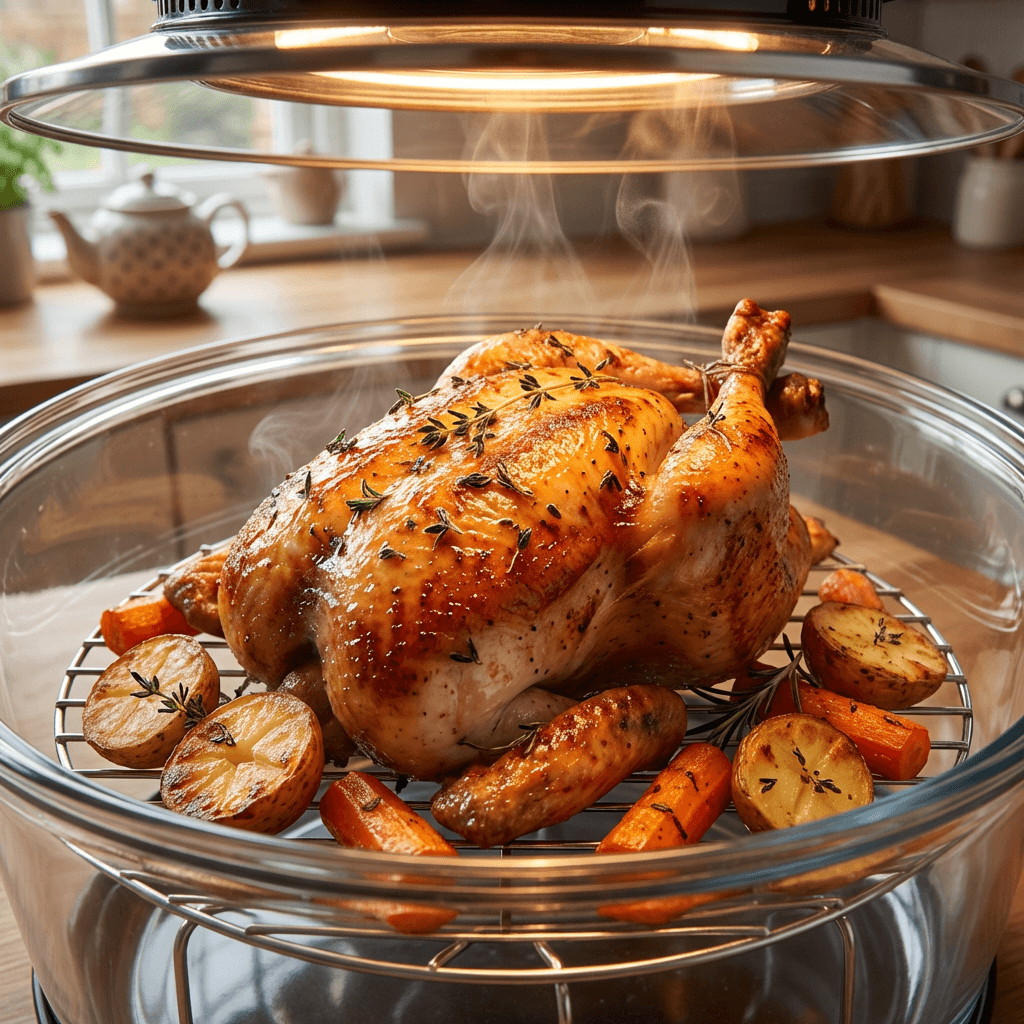

Batch cooking is one of the simplest ways to make life easier. It saves time, cuts stress, reduces food waste, and helps you avoid that familiar evening question: What on earth am I going to cook today? If you own a halogen oven, you already have a handy tool that can make batch cooking even more practical.
Many people think of a halogen oven as something for small meals, quick dinners, or the occasional roast potato. But it can do much more than that. Used well, it becomes a smart little kitchen helper for preparing food in batches, especially for smaller households, couples, and midlife cooks who want to eat well without running a large oven for every meal.
In this guide, we will look at the best foods to batch cook in a halogen oven to save both time and energy. We will also cover how to store and reheat food safely, what works especially well in a halogen oven, and how to build simple, comforting meals from your batch-cooked ingredients through the week.
If you want practical cooking, less kitchen hassle, and more control over household costs, this approach is well worth trying.
Why batch cooking works so well in a halogen oven
A halogen oven heats quickly, cooks efficiently, and is ideal for everyday food. For many people in Britain, it is especially useful because it feels less wasteful than switching on a full-size oven for a few chicken thighs, a tray of vegetables, or a couple of portions of baked food.
Batch cooking in a halogen oven works well for a few simple reasons.
First, it heats up fast. That means less waiting around and a shorter overall cooking time for many foods.
Second, the circulating hot air helps foods brown nicely. This is particularly useful for roasted vegetables, chicken pieces, sausages, and potato dishes.
Third, it suits practical weekly cooking. You can prepare enough food for several meals without filling the whole kitchen with trays, pans, and clutter.
Finally, it encourages simple home cooking. Instead of making complicated recipes every evening, you can cook the main components in advance and mix them into different meals later.
For people over 50, busy households, or anyone trying to be more mindful with money and energy use, this can be a genuinely useful kitchen habit.
What makes a food good for batch cooking?
Not every food is ideal for batch cooking. The best batch-cooked foods usually have a few things in common.
They store well in the fridge for a few days or freeze well for later. They reheat without turning dry, rubbery, or unpleasant. They are versatile enough to be used in more than one meal. And they are easy to cook in larger amounts without too much effort.
In a halogen oven, the best foods for batch cooking often fall into these groups:
- roasted vegetables
- cooked proteins
- potato-based staples
- traybake meals
- baked comfort foods
- breakfast and lunch items you can portion out
Let us go through the most useful options.
1. Roasted vegetables
Roasted vegetables are one of the best foods to batch cook in a halogen oven. They are easy, affordable, healthy, and incredibly flexible.
Vegetables such as carrots, peppers, onions, courgettes, parsnips, cauliflower, broccoli, and cherry tomatoes all work well. You can roast a large mixed batch and use it throughout the week in different ways.
They can be served with chicken or fish, stirred into pasta, added to wraps, mixed with couscous, or used in warm salads. They also work beautifully in soups and frittatas.
The halogen oven is particularly good for this because it gives vegetables colour and a slightly caramelised edge. That makes them more satisfying than simply boiling or steaming them.
A simple method is to chop your vegetables into similar-sized pieces, toss them lightly in oil, season with salt, pepper, and herbs, and cook them until softened and browned. You may need to cook denser vegetables like carrots and parsnips a little longer than softer ones.
Why roasted vegetables are worth batch cooking
They help you build quick meals without starting from scratch. They use up bits and pieces in the fridge. They make simple dinners feel more complete. And they are easy to portion into containers for later use.
If you are trying to eat more vegetables without making every meal feel like a health project, this is one of the easiest wins.
2. Chicken thighs and drumsticks
Chicken thighs are one of the most practical halogen oven batch-cooking foods. They are cheaper than many cuts, full of flavour, and tend to stay juicy when reheated.
You can cook a tray of seasoned chicken thighs or drumsticks and use them across several meals. One day they can be served with potatoes and vegetables. The next day the meat can be stripped and added to rice, wraps, sandwiches, soups, or a quick pasta dish.
This is especially useful if you do not want to cook from scratch every evening but still want meals that feel homemade.
A halogen oven gives chicken good browning and crisp skin, which adds flavour without needing much fuss. Just be sure the chicken is cooked through and properly stored once cooled.
Meal ideas from batch-cooked chicken
Batch-cooked chicken can become chicken salad, chicken wraps, chicken and vegetable pasta, chicken with microwave rice, or a simple jacket potato topping. A small batch can stretch further than many people expect.
3. Sausages
Sausages are another very convenient food to batch cook in a halogen oven. They are quick, filling, and easy to turn into different meals later.
Cook a batch once, then use them in sausage and mash, breakfast-style plates, sandwiches, traybakes, or sliced into pasta sauces and casseroles. They can also be served cold in some lunch dishes if stored and handled properly.
Because halogen ovens brown sausages well, they often come out with a nice colour and texture. This makes them far more appealing for leftovers than some softer cooked foods.
For households trying to cook sensibly without spending a lot, sausages remain one of the most budget-friendly batch-cooking ingredients.
4. Jacket potatoes
Jacket potatoes are excellent for batch cooking and work surprisingly well in a halogen oven. They take a while, but once cooked, they make several fast meals possible.
A cooked jacket potato can become a lunch with tuna, beans, or cottage cheese. It can be reheated for dinner with leftover chilli or roasted vegetables. It can even be scooped out and turned into potato cakes or mixed with other fillings.
For people who want cheap, comforting, satisfying food on hand, jacket potatoes are hard to beat.
One useful habit is to cook several at once, let them cool, then refrigerate them. That way, a filling meal is always close at hand.
5. Roast potatoes and seasoned potato wedges
If you enjoy practical comfort food, batch-cooked roast potatoes or wedges are very handy. They pair well with chicken, sausages, fish, eggs, baked beans, and many simple midweek meals.
The halogen oven is particularly suited to this kind of cooking because it crisps the outside of potatoes beautifully. Even reheated roast potatoes can still be enjoyable, especially if reheated briefly rather than overcooked.
Seasoned wedges are especially useful because they can double as a side dish, a quick lunch with dip, or part of a relaxed weekend meal.
For extra variety, try changing the seasoning. One batch can be classic salt and pepper, another can include paprika and garlic, and another can be herby and mild.
6. Salmon fillets and white fish portions
Fish may not be the first thing people think of for batch cooking, but some types can work very well, especially when you want lighter meals ready to go.
Salmon fillets and firm white fish portions can be cooked in the halogen oven and used in salads, grain bowls, sandwiches, or simple dinners. Salmon is especially good because it tends to stay moist when handled carefully.
You do need a little more care here. Fish is best eaten within a shorter time frame than some other batch-cooked foods, and reheating should be done gently to avoid drying it out.
Still, for two-day planning rather than a full week, fish can be very useful. It helps add variety and supports a more balanced meal pattern.
7. Meatballs, burgers, and small patties
Small meat items such as homemade meatballs, turkey burgers, mini beef patties, or salmon cakes are ideal for batch cooking because they portion easily and reheat well.
The halogen oven handles these nicely, giving them colour without needing a frying pan. Once cooked, they can be stored in meal-sized portions and used in wraps, pasta dishes, sandwiches, or with vegetables and potatoes.
This is a smart option for anyone who wants homemade food but does not want to cook from scratch every day.
Mini portions are especially helpful because they are flexible. You can reheat exactly what you need rather than committing to one large leftover dish.
8. Roasted root vegetable mixes
Carrots are useful, but a full root vegetable mix is even better. Think carrots, parsnips, red onion, sweet potato, swede, and small chunks of potato.
These mixes are excellent in cooler months and suit the comforting, practical style of home cooking many people enjoy. They can sit beside chicken or sausages, be folded into a warm grain bowl, or be blended into soup.
Because root vegetables are naturally sweet and roast well, they become more appealing than many people expect. They are also affordable and filling, which matters when food costs are on your mind.
A batch of roasted root veg can turn a plain meal into something that feels hearty and satisfying.
9. Stuffed peppers or baked vegetable halves
Stuffed peppers are a brilliant halogen oven batch-cooking food. They can be filled with rice, minced meat, lentils, chopped vegetables, or a mix of leftovers, then baked and portioned.
They store well, reheat nicely, and feel like a proper meal rather than just bits and pieces on a plate.
Other vegetables work too. Courgettes, aubergines, and even large mushrooms can be filled and baked in small batches.
These kinds of meals are ideal when you want something that feels organised and nourishing without being overly complicated.
10. Traybake meals
Few things suit batch cooking better than a traybake. Put your protein, vegetables, seasoning, and perhaps some potatoes into one dish, cook it together, and portion it out.
In a halogen oven, traybakes work best in appropriately sized dishes rather than very large roasting trays. But the principle is the same.
Chicken with peppers and onions, sausages with root vegetables, salmon with courgette and tomatoes, or chopped vegetables with small meatballs can all work well.
The great strength of a traybake is convenience. It cuts washing up, saves time, and makes portioning easy. For anyone trying to cook regularly without kitchen overload, this matters a lot.
11. Baked pasta dishes in smaller portions
A halogen oven can also be useful for smaller pasta bakes. Instead of making one huge dish, prepare two or three smaller dishes that can be eaten over a few days or frozen individually.
Tuna pasta bake, vegetable pasta bake, chicken pasta bake, or tomato and cheese pasta dishes all work well. These are comforting, familiar meals that tend to reheat nicely.
For many people, batch cooking is not just about efficiency. It is about reducing decision fatigue. Knowing there is a proper meal already cooked can make evenings feel much easier.
12. Frittatas, egg muffins, and baked egg dishes
Egg-based dishes are often overlooked in batch cooking, but they are extremely useful. A frittata made with cooked vegetables, a bit of cheese, and perhaps some leftover chicken or potato can give you several easy portions.
These are great for lunches, light dinners, or even breakfast. They can be eaten warm or cold, which makes them practical.
If you want something lighter than pasta or potatoes but still filling, this is a very good option. It is also an excellent way to use leftovers without wasting food.
13. Homemade kebabs and skewers
Chunks of chicken, onion, peppers, mushrooms, or courgette threaded onto skewers can be cooked in batches and used later with rice, flatbreads, or salad.
These are useful because they feel a bit more interesting than plain cooked meat, yet they are still simple. They also portion nicely and make weeknight meals feel less repetitive.
For households trying to stay practical without eating the same thing every day, small changes in format like this can help.
14. Garlic bread, savoury pastries, and side items
Batch cooking is not only about main meals. Sometimes the most helpful things to have ready are side items that complete a meal quickly.
Garlic bread, cheese-topped tomato slices, savoury puff pastry bites, or small baked sides can all be cooked in the halogen oven and kept for short-term use.
These should not dominate your batch-cooking plan, but they can be very helpful for turning soup, salad, or leftovers into a fuller meal.
How to batch cook in a halogen oven without making a mess of it
Batch cooking sounds easy, but a little planning helps. The key is not to cook huge amounts of random food. The real trick is to cook foods that can be mixed and matched throughout the week.
A smart approach is to prepare:
- one cooked protein
- one or two potato or carbohydrate options
- one big vegetable batch
- one comfort-food dish for easy reheating
For example, you might cook chicken thighs, jacket potatoes, roasted mixed vegetables, and a small pasta bake. From that, you can create several different meals without getting bored.
Try not to overcrowd the halogen oven. Air needs to move around the food for even cooking. If needed, cook in rounds rather than piling everything in at once.
Also think in portions. Smaller portions cool faster, store better, and make reheating simpler.
Safe storage matters
Batch cooking only saves time if the food stays pleasant and safe to eat. After cooking, let food cool sensibly, then refrigerate it in clean containers.
Labelled containers can be very helpful, especially if you tend to forget what was cooked when. This is not glamorous advice, but it prevents waste.
As a general rule, use fridge-stored cooked food within a sensible period and freeze portions you will not use soon. Reheat thoroughly, especially meat dishes. Avoid reheating the same food again and again.
A little organisation here makes batch cooking genuinely useful rather than a fridge full of vague leftovers.
How to build easy meals from your batch-cooked food
The beauty of batch cooking is not just having cooked food. It is having building blocks.
Here are a few simple combinations:
Roasted vegetables plus chicken and potatoes becomes a full dinner.
Jacket potato plus leftover salmon and a spoon of soft cheese becomes a quick lunch.
Sliced sausage plus roasted peppers and pasta becomes a fast evening meal.
Frittata plus salad becomes a light supper.
Roasted root vegetables plus meatballs becomes a comforting plate on a cool day.
The point is not to create restaurant food. The point is to make everyday eating easier, cheaper, and less tiring.
Best batch-cooking strategy for smaller households
Many batch-cooking articles assume you are feeding a large family, but that is not always the case. Plenty of people over 50 are cooking for one or two people. In that situation, the halogen oven becomes even more useful.
You do not need giant trays of food. You need sensible portions that give you flexibility without waste.
For smaller households, it often helps to batch cook in “mini cycles.” Instead of cooking for an entire week at once, cook enough for two or three days. That keeps food fresher and reduces the feeling of eating the same thing endlessly.
A small batch of chicken, a few jacket potatoes, and one roasted vegetable mix can go a long way.
How batch cooking helps save energy as well as time
The time-saving side of batch cooking is obvious. Cook once, eat several times. But the energy-saving side matters too.
Using a halogen oven for a focused batch-cooking session can reduce the number of separate cooking sessions you need during the week. Instead of heating an appliance every single evening for full meals, you do the heavier cooking once and rely on quick reheating or simple assembly later.
That can also reduce kitchen stress. And that matters more than many people realise.
When cooking feels easier, you are more likely to stay consistent. You are less tempted by expensive takeaways, less likely to waste ingredients, and more likely to actually use the food you bought.
Common mistakes to avoid
One common mistake is cooking foods that do not reheat well. Another is making too much of just one thing and getting bored with it by day two.
Some people also forget texture. Foods such as roast potatoes, sausages, and chicken are usually more satisfying when reheated briefly and carefully rather than blasted for too long.
Overcrowding the halogen oven is another issue. It may seem faster to cram it full, but that often leads to uneven cooking.
And finally, do not batch cook foods just because someone online says you should. Batch cook the foods you genuinely like to eat. Practicality only works when it fits real life.
A simple halogen oven batch-cooking plan to try this week
If you are new to this, keep it very simple.
Cook a batch of chicken thighs.
Roast a large mixed tray of vegetables.
Bake three or four jacket potatoes.
Add either sausages, a small frittata, or a pasta bake depending on what you enjoy most.
That one session can easily give you several meals without leaving you feeling stuck with identical leftovers.
Final thoughts
The best foods to batch cook in a halogen oven are the ones that make ordinary life easier. Roasted vegetables, chicken thighs, sausages, potatoes, fish portions, traybakes, and simple baked dishes all have one thing in common: they help you turn one cooking session into several satisfying meals.
That is the real beauty of batch cooking. It is not about perfection. It is not about spending an entire Sunday surrounded by containers. It is about reducing effort, saving time, being a bit smarter with energy, and making home cooking feel manageable again.
For many British households, especially smaller ones, the halogen oven is not just a gadget. It can be a very practical way to cook well, spend less time in the kitchen, and make everyday meals simpler.
If you have never tried batch cooking in your halogen oven before, start small. Cook a few things you already enjoy, store them well, and build from there. You may find that this simple habit saves far more than time. It can save effort, money, and a fair amount of weekday frustration too.