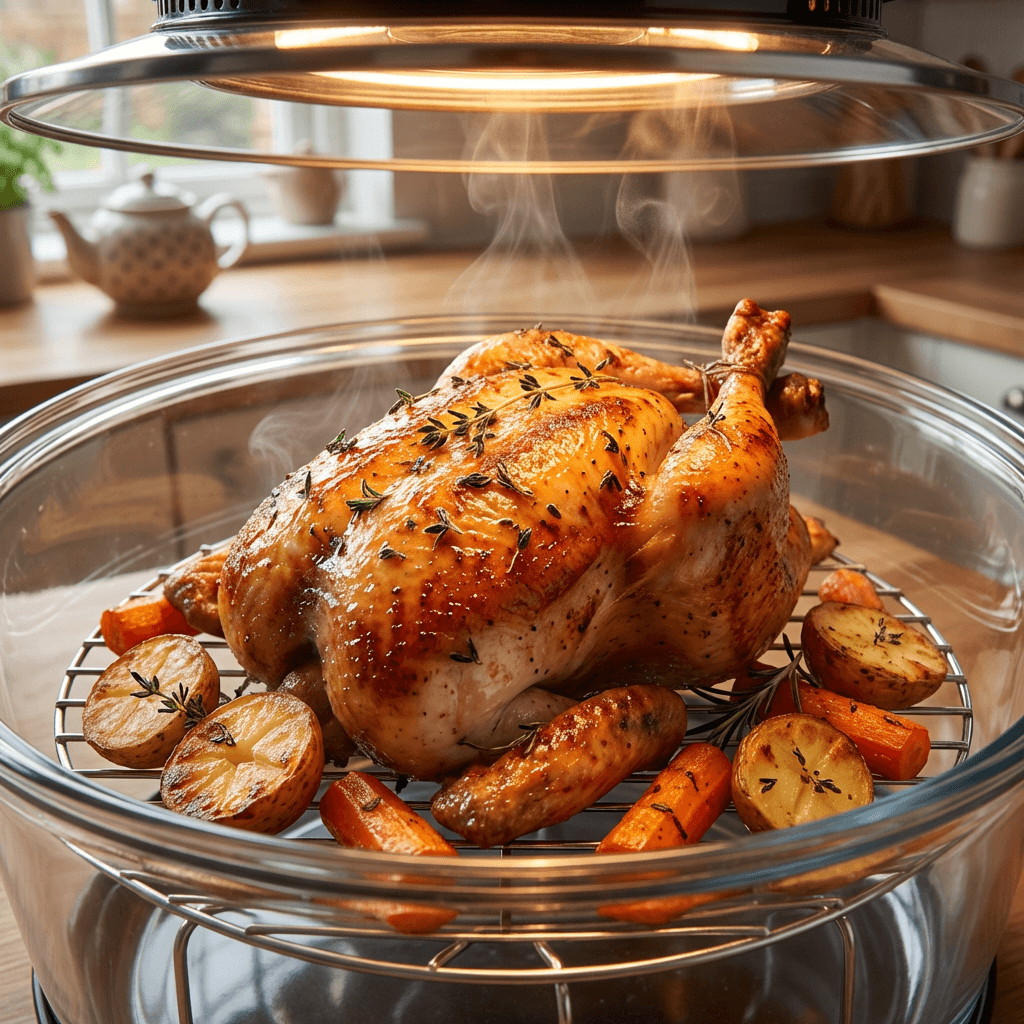
Cooking well does not have to mean buying expensive ingredients, spending hours in the kitchen or preparing complicated recipes.
For many people over 50, the most useful meals are often the simplest ones: familiar ingredients, manageable portions and very little washing up. A halogen oven can be particularly practical when you are cooking for one or two people and do not want to heat a large conventional oven for a small meal.
Food prices remain an important consideration for households across the UK. According to the Office for National Statistics, food and non-alcoholic drink prices were still rising in the year to May 2026, although the rate of increase had slowed.
That makes it even more useful to have a small collection of reliable, affordable meals that you can prepare without wasting ingredients.
The best budget halogen oven meals are not based on expensive specialist foods. They use everyday supermarket ingredients such as potatoes, eggs, beans, frozen vegetables, chicken thighs, tinned fish and seasonal produce.
In this guide, you will find practical halogen oven meal ideas designed for UK households, especially adults over 50 who want cooking to feel easier, calmer and more affordable.
Why a Halogen Oven Can Be Useful for Budget Cooking
A halogen oven is essentially a compact countertop oven that uses a halogen heating element and circulating hot air.
Its smaller cooking chamber can make it convenient for preparing modest portions. Instead of heating a full-sized oven for one baked potato, two chicken thighs or a small tray of vegetables, you can use an appliance that is better suited to the quantity being cooked.
The exact running cost will depend on:
- the wattage of your halogen oven;
- the temperature you select;
- the length of the cooking time;
- current electricity prices;
- the amount of food you cook at once.
It is therefore better not to assume that one appliance will always be cheaper than another.
However, Energy Saving Trust advises that using a smaller cooking appliance can be more economical than heating a full oven when cooking for one or two people. It also recommends matching the appliance to the quantity and type of food being prepared.
A halogen oven may also help you save money in less obvious ways.
You can see the food through the glass bowl, making it easier to check whether it is cooked without repeatedly opening the oven. You can prepare several ingredients together, and the bowl and racks are usually easier to clean than a collection of saucepans and baking trays.
Most importantly, a halogen oven can make simple home cooking feel achievable on days when you have limited time, mobility or energy.
What Makes a Good Budget Meal After 50?
A cheap meal is not necessarily good value if it leaves you hungry an hour later.
A useful budget meal should ideally provide a combination of:
- protein;
- starchy carbohydrates;
- vegetables;
- flavour;
- enough food to feel satisfied.
NHS guidance recommends including a variety of vegetables, higher-fibre starchy foods and protein sources such as beans, pulses, fish, eggs and meat as part of a balanced diet.
Protein can become especially important as we get older because it contributes to the maintenance and repair of body tissues. NHS dietetic guidance commonly encourages older adults to include a source of protein at meals.
Fortunately, useful protein sources do not have to be expensive.
Eggs, lentils, beans, chickpeas, tinned fish, yoghurt and modest portions of chicken can all form the basis of affordable meals.
Potatoes are another excellent budget ingredient. They are familiar, versatile, filling and easy to cook in a halogen oven. Rice, pasta and bread can also help make meals more substantial, although these may need to be prepared separately.
Frozen vegetables are particularly convenient because you can use only what you need and return the rest to the freezer. This reduces the risk of forgotten fresh vegetables becoming soft or mouldy at the back of the fridge.
Seven of the Best Budget Halogen Oven Meals
The following meals are designed mainly for one or two people. Quantities can be adjusted depending on your appetite and the size of your halogen oven.
Cooking times are approximate. Halogen ovens vary, so always check that food is properly cooked before serving, especially poultry.
1. Crispy Chicken Thighs with Potatoes and Carrots
Chicken thighs are often more affordable than chicken breast and can remain moist during cooking.
They also have plenty of flavour, which means you do not need an expensive sauce or a long list of seasonings.
Ingredients
For two portions:
- 4 chicken thighs;
- 3 medium potatoes;
- 2 carrots;
- 1 small onion;
- 1 tablespoon of oil;
- 1 teaspoon of dried mixed herbs;
- 1 teaspoon of paprika;
- black pepper;
- a small pinch of salt.
Method
Cut the potatoes into small wedges and slice the carrots and onion.
Place the vegetables in a bowl, add half the oil and season with mixed herbs, pepper and a little salt. Stir until everything is lightly coated.
Arrange the vegetables in a suitable baking dish or tray inside the halogen oven.
Rub the remaining oil and paprika over the chicken thighs. Place them on the higher rack above the vegetables where possible. This allows some of the cooking juices to add flavour to the potatoes and carrots.
Cook at approximately 180°C for 35–45 minutes.
Turn the vegetables once during cooking. Check that the chicken is fully cooked, with no pink meat remaining, and that the juices run clear.
Why it is budget-friendly
The meal uses inexpensive vegetables and a relatively economical cut of chicken. It also provides two complete portions in one cooking session.
Any leftover chicken can be chilled promptly and used the following day in a sandwich, salad or baked potato filling.
2. Jacket Potato with Beans and Cheese
A jacket potato is one of the easiest halogen oven meals you can make.
It is filling, flexible and ideal when you do not want to follow a complicated recipe.
Ingredients
For one portion:
- 1 large baking potato;
- half a tin of baked beans;
- a small handful of grated Cheddar;
- black pepper;
- optional sliced spring onion.
Method
Wash and dry the potato. Prick the skin several times with a fork.
Rub the potato with a very small amount of oil for a crispier skin, if desired.
Cook it directly on the lower rack at approximately 190°C for 45–60 minutes, depending on its size. Turn it once during cooking.
The potato is ready when the skin is crisp and the centre feels soft when carefully pressed.
Warm the baked beans separately, or place them in a heatproof dish in the halogen oven during the final part of cooking.
Split the potato, add the beans and sprinkle the cheese on top. Return it to the oven for a few minutes if you want the cheese to melt.
Easy variations
Replace the baked beans with:
- cottage cheese and chopped tomato;
- tinned tuna mixed with a little yoghurt;
- leftover chilli;
- chickpeas with curry powder;
- cooked vegetables and grated cheese.
Why it is budget-friendly
Potatoes, baked beans and a small amount of cheese create a satisfying meal from basic supermarket ingredients.
You also use only the amount of cheese needed for flavour rather than making it the main ingredient.
3. Sausage, Onion and Vegetable Tray Bake
A tray bake is useful when you want a familiar dinner with very little washing up.
You can use standard sausages, reduced-fat sausages, vegetarian sausages or whichever variety suits your diet and budget.
Ingredients
For two portions:
- 4 sausages;
- 2 medium potatoes;
- 1 onion;
- 2 carrots;
- a handful of frozen mixed vegetables;
- 1 tablespoon of oil;
- 1 teaspoon of dried herbs;
- black pepper.
Method
Cut the potatoes and carrots into small pieces so that they cook evenly.
Place them in a suitable halogen oven dish with the sliced onion. Add the oil, herbs and pepper, then mix.
Cook the vegetables at approximately 180°C for 10 minutes.
Add the sausages and continue cooking for around 25–35 minutes. Turn the sausages and vegetables halfway through.
Add the frozen mixed vegetables for the final 10–15 minutes.
Make sure the sausages are thoroughly cooked before serving.
Money-saving idea
You do not always need two sausages per person.
Try using three sausages between two portions and adding more potatoes, onions, carrots or beans. Slicing the sausages into pieces distributes them throughout the meal, so each serving still feels generous.
4. Herby Fish Fillet with Potato Wedges and Peas
Fish can sometimes appear expensive, but frozen white fish fillets can be a useful option.
Because frozen fillets can be stored for longer, there is less pressure to use them immediately.
Ingredients
For one portion:
- 1 frozen or defrosted white fish fillet;
- 2 medium potatoes;
- 1 teaspoon of oil;
- dried parsley or mixed herbs;
- lemon juice;
- black pepper;
- a portion of frozen peas.
Method
Cut the potatoes into thin wedges.
Coat them lightly with oil, herbs and black pepper. Place them in the halogen oven and cook at approximately 190°C for 15–20 minutes.
Turn the wedges and add the fish fillet in a small heatproof dish or on a piece of foil with the edges folded upwards.
Season the fish with herbs, pepper and lemon juice.
Continue cooking until the wedges are golden and the fish is opaque and flakes easily with a fork. Depending on the thickness of the fillet, this may take around 12–20 minutes.
Cook or heat the peas separately, or place them in a covered ovenproof dish with a small splash of water.
Why it works
This meal gives you fish, potatoes and vegetables without requiring a complicated sauce.
NHS guidance recommends eating at least two portions of fish a week, including one portion of oily fish. You could occasionally replace the white fish with a small salmon or mackerel fillet when your budget allows.
5. Baked Egg and Vegetable Dish
Eggs are extremely useful for quick budget meals.
This simple baked egg dish works for breakfast, lunch or a light evening meal.
Ingredients
For one portion:
- 2 eggs;
- a handful of frozen mixed vegetables;
- 1 small cooked potato, sliced;
- 1 tablespoon of milk;
- a small amount of grated cheese;
- black pepper;
- dried herbs.
Method
Lightly grease a small ovenproof dish that fits inside the halogen oven.
Add the sliced cooked potato and vegetables.
Beat the eggs with the milk, pepper and herbs. Pour the mixture over the vegetables.
Sprinkle a small amount of cheese on top.
Cook at approximately 170°C for 15–20 minutes, or until the egg has set in the centre.
Allow it to rest for a few minutes before serving.
Useful additions
This recipe is ideal for using small quantities of food left in the fridge.
You could add:
- half a tomato;
- a few slices of pepper;
- leftover broccoli;
- chopped mushrooms;
- a spoonful of cooked beans;
- a small amount of leftover chicken.
Using leftovers in a planned dish is safer and more appealing than leaving them in the fridge until they are forgotten.
6. Stuffed Pepper with Rice, Beans and Cheese
This is an inexpensive meat-free meal that uses beans to provide protein and fibre.
For convenience, use leftover cooked rice or a pouch of ready-cooked rice. A pouch costs more than cooking rice from dry, but it may still be worthwhile when mobility, time or energy are limited.
Ingredients
For two pepper halves:
- 1 large pepper;
- approximately 150g cooked rice;
- half a tin of kidney beans or mixed beans;
- 2 tablespoons of chopped tinned tomatoes;
- a small amount of grated cheese;
- paprika or mild chilli powder;
- black pepper.
Method
Cut the pepper in half and remove the seeds.
Mix the cooked rice, drained beans, tomatoes and seasoning in a bowl.
Fill the pepper halves with the mixture and place them in a small ovenproof dish.
Cook at approximately 180°C for 20–25 minutes.
Sprinkle the cheese over the filling and cook for another 5–10 minutes until the pepper is tender and the cheese has melted.
Why it is budget-friendly
Beans are economical, filling and easy to store.
NHS budget-eating advice recommends using foods such as beans and chickpeas to add bulk and nutrients to soups, salads and stews.
The remaining beans can be used in a jacket potato, soup or salad the following day.
7. Roasted Chickpeas, Potatoes and Vegetables
This simple tray bake is suitable for anyone looking for an affordable meat-free dinner.
The chickpeas become lightly crisp while the vegetables soften and develop more flavour.
Ingredients
For two smaller portions:
- 1 tin of chickpeas;
- 3 medium potatoes;
- 2 carrots;
- 1 onion;
- a handful of frozen or fresh vegetables;
- 1 tablespoon of oil;
- 1 teaspoon of paprika;
- half a teaspoon of garlic granules;
- black pepper.
Method
Drain and rinse the chickpeas.
Cut the potatoes and carrots into small pieces. Slice the onion.
Place the potatoes, carrots and onion in a suitable dish. Add the oil and seasoning, then mix well.
Cook at approximately 185°C for 15 minutes.
Add the chickpeas and continue cooking for another 20–25 minutes. Stir once or twice so that everything browns evenly.
Add quicker-cooking vegetables during the final 10–15 minutes.
Serve as it is, or add a spoonful of natural yoghurt with herbs.
Make it more filling
Serve the tray bake with:
- a slice of wholemeal bread;
- a small portion of rice;
- a spoonful of hummus;
- an extra baked egg;
- a little grated cheese.
How to Keep Halogen Oven Meals Affordable
The recipes are only part of the solution. The way you shop, store ingredients and plan portions can make an even greater difference.
1. Build Meals Around What You Already Have
Before writing a shopping list, check your:
- fridge;
- freezer;
- cupboards;
- vegetable basket.
Look for ingredients that need to be used soon.
If you already have two potatoes, half an onion and some frozen peas, you only need to buy a protein source to create a complete meal.
Beginning with what you own helps prevent buying duplicate ingredients.
2. Choose Ingredients That Work in Several Meals
A good budget ingredient should have more than one possible use.
For example, a bag of potatoes can become:
- jacket potatoes;
- wedges;
- a tray bake;
- a topping for a simple pie;
- part of a vegetable frittata;
- a side dish for fish.
A tin of chickpeas can be used in:
- a roasted vegetable tray bake;
- a stuffed pepper;
- soup;
- salad;
- a jacket potato filling.
This flexibility makes it easier to use the whole pack.
3. Use Frozen Vegetables Without Guilt
Frozen vegetables are not a poor substitute for “real” cooking.
They are convenient, usually require no peeling or chopping, and allow you to take only the portion you need.
Peas, mixed vegetables, broccoli, cauliflower, spinach and sliced peppers can all help turn a basic meal into a more balanced one.
NHS guidance confirms that frozen and tinned produce can contribute towards your fruit and vegetable intake, alongside fresh produce.
When buying tinned vegetables, look for options without excessive added salt or sugar where practical.
4. Cook Two Portions, Not Seven
Batch cooking can save time and energy, but it does not need to mean preparing an enormous pan of food.
For someone living alone, two portions may be enough.
Eat one portion today and keep the second for tomorrow. This gives you the benefit of cooking ahead without filling the freezer with meals you may not want later.
Always cool and store leftovers safely, refrigerate them promptly and reheat them thoroughly.
5. Use Meat as Part of the Meal
Instead of making meat the largest item on the plate, combine a smaller quantity with potatoes, vegetables, beans or lentils.
For example:
- slice two sausages through a large vegetable tray bake;
- add one cooked chicken thigh to a jacket potato filling;
- combine a small amount of mince with lentils;
- serve fish with generous vegetables and potatoes.
This approach can reduce the cost per portion while keeping the meal enjoyable.
6. Be Careful with False Economy
The cheapest product is not always the best value.
A very large pack may appear economical, but it is not a saving if part of it is thrown away.
Before choosing a larger pack, ask:
- Can I freeze it?
- Will I use it before it spoils?
- Can it be divided into smaller portions?
- Do I genuinely enjoy eating it?
Buying the right quantity is often more economical than buying the lowest price per kilogram.
A Simple Budget Shopping List
You do not need every item below at once. Treat this as a flexible starting point for several days of meals.
Protein
- Eggs
- Chicken thighs
- Tinned beans
- Chickpeas
- Frozen fish fillets
- Baked beans
- Natural yoghurt
- A small block of Cheddar
Filling basics
- Potatoes
- Wholemeal bread
- Rice
- Pasta
- Oats
Vegetables
- Onions
- Carrots
- Frozen peas
- Frozen mixed vegetables
- Peppers when affordable
- Tinned tomatoes
Flavour
- Mixed herbs
- Paprika
- Garlic granules
- Black pepper
- Mild curry powder
- Lemon juice
- A small bottle of cooking oil
With these ingredients, you can create tray bakes, jacket potatoes, egg dishes, stuffed vegetables and simple fish or chicken meals without buying a separate list of ingredients for every recipe.
Making Cooking Easier When Energy or Mobility Is Limited
Budget cooking should not only save money. It should also be manageable.
There is no prize for making every part of a meal from scratch.
Pre-cut vegetables, frozen ingredients, ready-cooked rice and tinned beans can all be sensible choices when they help you cook at home more regularly.
Try keeping frequently used items within easy reach. A small tray containing oil, herbs, pepper and garlic granules can reduce the number of times you need to move around the kitchen.
Prepare ingredients while seated when this is safer and more comfortable. Use a stable chopping board and choose lightweight bowls and oven dishes that are easy to lift.
Long-handled tongs can help you turn food without reaching too close to the heating element. Always switch off and unplug the appliance before moving or cleaning it, and be careful because the glass bowl and lid can become extremely hot.
The aim is not to create a perfect kitchen routine.
The aim is to make your next meal easier.
Frequently Asked Questions
Are halogen ovens economical for one person?
They can be practical for one-person meals because the cooking space is smaller than a conventional oven.
However, the actual cost depends on the appliance wattage, cooking temperature, cooking time and your electricity tariff. For a fair comparison, multiply the appliance’s power in kilowatts by the number of hours used and your electricity unit rate.
What is the cheapest meal to cook in a halogen oven?
A jacket potato with beans is likely to be one of the simplest low-cost options.
Egg and vegetable dishes, chickpea tray bakes and roasted seasonal vegetables can also be affordable.
Prices vary between supermarkets, regions and special offers, so it is better to compare the ingredients you regularly buy rather than rely on a fixed cost per serving.
Can I cook frozen food in a halogen oven?
Many frozen foods can be cooked in a halogen oven, but you should always follow the package instructions and your appliance manual.
Cooking times may need adjusting. Make sure food is piping hot throughout before serving.
Can I cook an entire meal at once?
Yes, depending on the size and design of your appliance.
You can often place potatoes or vegetables in the lower section and cook chicken, sausages or fish on a higher rack. Ingredients may need to be added at different times because they do not all cook at the same speed.
Is a halogen oven suitable for cooking for two?
Yes. A halogen oven is particularly useful for modest meals for one or two people.
For larger families or large batch-cooking sessions, a conventional oven may offer more usable space.
Final Thoughts
Eating on a budget after 50 does not mean living on bland food or repeating the same meal every day.
A small number of dependable ingredients can produce many different dinners:
- chicken thighs with roasted vegetables;
- jacket potatoes with beans;
- fish with wedges and peas;
- baked eggs with leftover vegetables;
- stuffed peppers;
- chickpea tray bakes.
The key is to keep the meals flexible.
Use the vegetables you already have. Replace one protein source with another. Cook enough for tomorrow when it is practical, but avoid preparing more food than you will realistically eat.
A halogen oven will not solve every kitchen problem, but it can make smaller meals feel more convenient. For adults over 50 who cook for one or two, have limited mobility or simply want less fuss, that convenience can be genuinely valuable.
Start with one simple meal.
A potato, a few vegetables and an affordable protein source are often all you need to make dinner feel complete.
Please note: Cooking temperatures and times are approximate because halogen ovens vary. Follow the instructions supplied with your appliance and check that meat, poultry, fish and reheated foods are fully cooked before eating.
Want more simple, budget-friendly cooking ideas after 50? Join the Fifty or More VIP list and get early access to the Wellness Kitchen Collection — special £97 pricing for the first 50 VIP members.